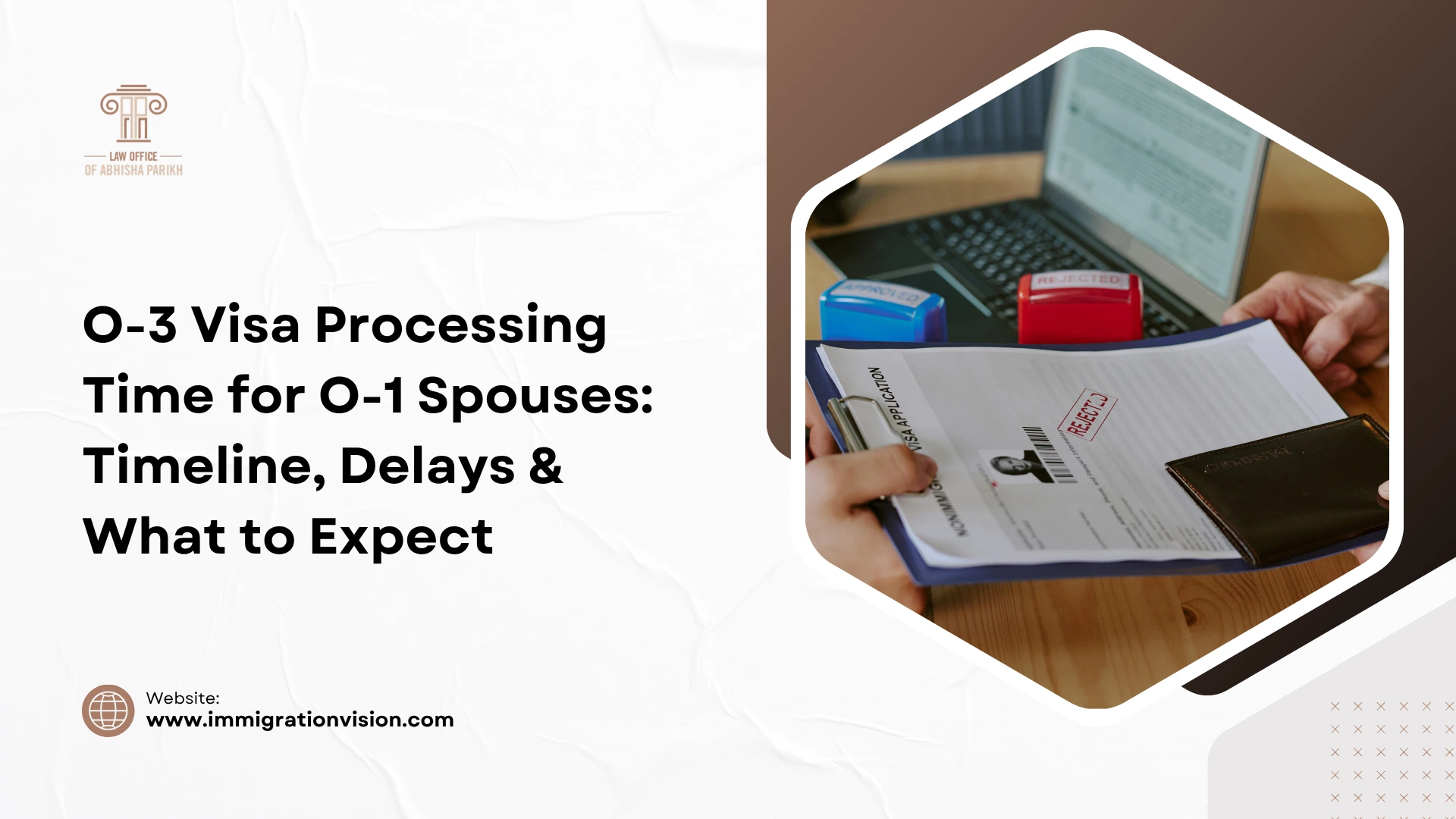
When you qualify for an O-1 visa, the first question on your mind usually isn’t about your new job; it is about your family. The legal pathway to bring your spouse and unmarried children to the United States is the O-3 dependent visa. But once you know how they can join you, the immediate next question is how soon they can actually make the move.
We know that the O-1 spouse visa processing time drives almost every major decision you have to make right now: when to break your residential lease, when to book your flights, and when to enroll your kids in a new school.
Because so much is riding on the calendar, you need a clear understanding of what to expect. Here is a realistic look at the O-3 visa timeline in the USA, the hidden bottlenecks that cause frustrating delays, and how a strategic O-1 visa lawyer can help keep your family together from day one.
Why Is There No Single O-3 Visa Processing Time?
If you are searching for an exact O3 visa processing time, the reality is that the U.S. government does not guarantee a uniform timeline for every family.
The total wait depends on several moving parts:
- Location: Are you applying from outside the U.S. (Consular Processing) or inside the U.S. (Change of Status)?
- Embassy Backlogs: How long is the wait for an interview at your specific local U.S. embassy?
- The Primary Applicant: Has the principal O-1 visa petition already been approved, or are both applications pending simultaneously?
Because these variables change from month to month, two families with identical O3 visa requirements may experience very different timelines.
The Two Main Processing Timelines
Your family’s timeline depends entirely on where your spouse and children are physically located when they apply.
1. Applying from Your Home Country (Consular Processing)
If your family is moving to the U.S. together, your dependents will usually complete the online DS-160 application and attend an interview at a U.S. embassy.
The longest part of this wait is usually just getting the interview appointment. Depending on post-pandemic backlogs and staffing at your local embassy, you might secure a slot in a few weeks or have to wait for several months. Once the interview is finished and the consular officer approves the case, it typically takes only a week or two to receive the passport back with the valid O-3 visa stamp.
2. Applying from Inside the US (Change of Status)
If your spouse is already legally inside the United States (for example, on an F-1 student visa), they do not have to leave the country and go to an embassy. Instead, they file Form I-539 with U.S. Citizenship and Immigration Services (USCIS) to change their status.
However, avoiding the embassy does not always mean a faster process. USCIS service centers have their own domestic backlogs, and reviewing a change-of-status application can still take several months.
Can You Speed it up? Premium Processing Explained
A major source of confusion is whether families can pay to expedite O3 visa processing.
The short answer is that there is no standalone Premium Processing fee designed specifically for O-3 dependent applications (Form I-539). You cannot pay the government to push a dependent application to the front of the line on its own.
However, there is a legal strategy. If the O-3 dependent files concurrently (at the exact same time) with the primary O-1 worker, and the O-1 worker pays the Premium Processing fee for their petition (Form I-129), USCIS often processes the O-3 application concurrently as a “courtesy.” While USCIS is no longer legally obligated to do so, bundling the applications remains the most effective way an O-1 visa lawyer can align the family’s timeline.
3 Common Reasons For O-3 Visa Delays
Even a well-prepared application can hit a snag. Understanding these common delays can help you avoid them:
1. The Main O-1 Visa Gets Delayed
Because the O-3 visa is completely dependent on the primary applicant, your family’s timeline is tied to yours. If the government asks the O-1 worker for more information (called a Request for Evidence), the dependent’s application is automatically put on hold until the main O-1 visa is fully approved.
2. Missing Relationship Documentation
Meeting the strict O3 visa requirements requires flawless paperwork. If your marriage certificate is not government-issued, lacks a certified English translation, or if the birth certificates for children are incomplete, the consular officer will halt the process.
3. Administrative Processing [under section 221 (g)]
Sometimes, an embassy interview goes well, but the consular officer states the case requires “administrative processing.” This means the government is conducting deeper background or security checks. Unfortunately, there is no expedited timeframe for administrative processing; families must wait until the consulate completes its review.
How a Seasoned O-1 Visa Lawyer Helps With the Process
At The Law Office of Abhisha Parikh, we know that visa delays do not just cause frustration; they cause expensive logistical nightmares. Therefore, we protect your family by proactively managing the timeline. Our expert immigration attorney provides exceptional visa filing services:
Synchronizing the Filings: We strategically bundle the primary O-1 and dependent O-3 applications to maximize the chances of concurrent processing, helping you avoid months of family separation.
Auditing Documents Early: We ensure your marriage and birth certificates meet the exact legal standards required by the U.S. government before they are submitted, eliminating easily preventable delays.
Mapping the Big Picture: While we manage the immediate move, we also help you look ahead. We evaluate whether the dependent spouse might qualify for an independent work visa in the future and map out the timeline for eventual employment-based Green Card processing.
Secure Your Family’s Move to the US
Relocating your career is stressful enough; you shouldn’t have to worry about whether your family can come with you. If you are concerned about your O3 visa processing time or need a strategic plan to file your family’s petitions without errors, contact The Law Office of Abhisha Parikh today. Let us manage the government deadlines and filing strategy, so your family can cross the border together, exactly as planned.
Frequently Asked Questions
Can I track my O-3 visa processing time online?
Yes. If you applied for a visa through consular processing abroad, you can track your status using the State Department’s Consular Electronic Application Center (CEAC) website. If you applied inside the U.S. via Form I-539, you can check your status using the USCIS online case tracker with your receipt number.
Do I have to apply for my O-3 visa at the exact same time as my spouse?
No. While concurrent filing is highly recommended to keep the O-3 visa timeline aligned, spouses can apply separately later if they plan to join their O-1 visa holder partner in the U.S. later.
Will my children’s O-3 visas be processed at the same time as mine?
Generally, yes. If a spouse and children apply together, their applications are typically processed on the same timeline and they can attend the embassy interview together.