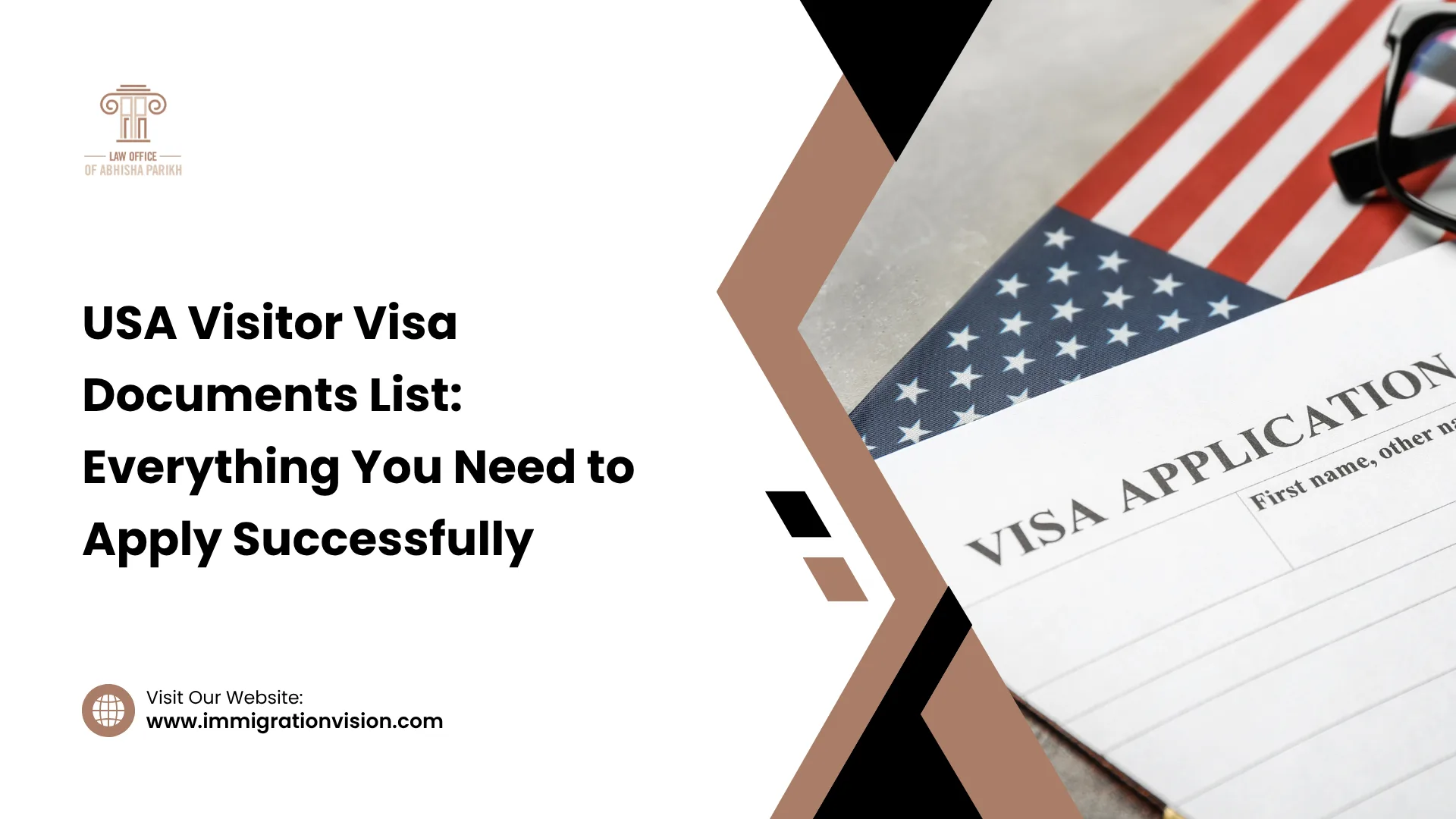
Getting a U.S. visitor visa rejected is more common than most people realize, and usually, the reason is a missing or mismatched document, not a bad application.
Many first-time applicants wonder: Is it hard to get a visa for the USA? Honestly, it depends on how well-prepared your documents are. Clear paperwork with a strong travel purpose significantly improves your chances, while underprepared applications face delays or outright refusals.
This guide walks you through every document you need, broken into clear categories, with notes on what each one actually proves to the reviewing officer. Where things get complex, we have flagged that consulting a US visitor visa lawyer can make the difference between an approval and a preventable refusal.
What Is a USA Visitor Visa?
A U.S. visitor visa, officially known as a B visa, is a non-immigrant visa that allows foreign nationals to enter the United States temporarily for non-work purposes.
There are two types:
- B-1 (Business Visitor): For people attending business meetings, conferences, negotiations, or professional training. You are not allowed to work or earn money in the U.S. on this visa.
- B-2 (Tourism/Personal): For vacations, visiting friends or family, attending events, or seeking medical treatment in the U.S.
Many applicants apply for a B-1/B-2 combined visa, which allows both purposes under one visa. Most of the core documents are the same, but your supporting evidence will change based on why you are visiting.
Mandatory Documents for First-Time USA Visitor Visa Applicants
These are the non-negotiables. Every applicant, regardless of nationality or travel purpose, must have these documents ready before their visa interview.
1. Valid Passport
Your passport must be valid for at least six months beyond your intended stay in the United States. For example, if you plan to visit until August 2026, your passport must be valid until at least February 2027.
If your passport is expiring soon, renew it before starting your visa application. Carrying your old passport (if it has previous visas or stamps) alongside your new one is also a good idea, as it shows travel history.
2. DS-160 Confirmation Page
The DS-160 is the U.S. nonimmigrant visa application form, completed entirely online on the U.S. Department of State’s website. Once you complete and submit it, print the confirmation page with the barcode. This is the single most important piece in your B1/B2 visa documents checklist.
Double-check every detail before submitting: your name must match your passport exactly, and your travel history must be accurate.
3. Visa Interview Appointment Letter
After paying the visa fee and scheduling your appointment at a U.S. Embassy or Consulate, you will receive a confirmation letter. Print it out and bring it to the interview.
4. U.S. Visa-Compliant Photograph
You will need a recent passport-size photograph that meets U.S. visa photo requirements. These are specific:
- 2×2 inches (51×51 mm) in size
- Color photo with a white or off-white background
- Taken within the last six months
- No glasses, headwear (unless for religious reasons), or heavy filters
5. Visa Fee Payment Receipt
You must pay the MRV (Machine Readable Visa) fee before booking your interview. Keep the payment confirmation as proof.
Supporting Documents That Strengthen Your Application
Once you have the mandatory documents in order, the next step is building a strong supporting case. These documents help the consular officer understand who you are, why you want to visit the U.S., and, most importantly, why you will return home.
Financial Documents
The embassy wants to be sure you can pay for your trip without needing to work illegally in the U.S. Bring:
- Bank statements from the last 3 to 6 months
- Salary slips from the last 3 months (if employed)
- Income Tax Returns (ITR) from the last 2 to 3 years
- Fixed deposit or investment statements (if applicable)
- Sponsorship letter and sponsor’s financial documents (if someone else is paying for your trip)
There is no fixed minimum bank balance required for a U.S. travel visa, but your finances should clearly be enough to cover flights, accommodation, and daily expenses for the duration of your stay.
Proof of Ties to Your Home Country
This is the part most first-time applicants overlook, and it is critical.
A consular officer must be convinced that you will return home after your visit. The stronger your ties to your home country, the better. Documents that help prove this include:
- Employment letter from your employer confirming your job title, salary, and approved leave
- Business ownership documents if you run a business
- Property ownership documents, such as a home, land, or commercial space, in your name
- Family ties proof, such as a marriage certificate, children’s birth certificates, or proof that close family members remain in your home country
- Enrollment proof if you are a student
Think of these as your “reasons to come back home” file. The more concrete they are, the more credible your application looks.
Documents Based on Your U.S. Travel Visa Type
Your travel purpose shapes what additional documents you need. Here is a breakdown by application type:
B-1: Business Visitors
- Invitation letter from the U.S. company or organization you are visiting, on official letterhead
- Details of the business meeting, conference agenda, or event registration
- Your employer’s letter confirming the purpose of travel and that you are a full-time employee
- Proof that your salary or business income continues during your U.S. visit
B-2: Tourism
- Detailed travel itinerary (places you plan to visit, approximate dates)
- Hotel bookings or confirmed accommodation details
- Return flight booking confirmation
- Approved leave letter from your employer
B-2: Visiting Family or Friends
- Invitation letter from your host in the U.S. (a personal letter, not just an email)
- Your host’s proof of status in the U.S. (Green Card, valid visa, or citizenship documents)
- Proof of your relationship with the host (photos, shared family records, etc.)
B-2: Medical Treatment
- A letter from your doctor in your home country explaining your diagnosis and why treatment in the U.S. is necessary
- A letter from the U.S. hospital or medical facility confirming the appointment, treatment plan, and estimated cost
- Proof that you have enough funds to cover the treatment costs
- Evidence that a family member or friend will accompany or support you
How to Organize Your Documents for the Visa Interview
Arriving at your interview with a neatly organized file leaves a positive impression. Here is a simple system you can use:
- Folder 1 — Mandatory Documents
DS-160 confirmation, appointment letter, photograph, fee receipt, passport(s) - Folder 2 — Financial Proof
Bank statements, salary slips, ITR, investment documents - Folder 3 — Employment or Business Proof
Employer letter, business registration, pay stubs - Folder 4 — Travel Purpose
Invitation letter, hotel bookings, itinerary, conference details - Folder 5 — Home Country Ties
Property papers, family certificates, leave approval
Always carry original documents along with clean photocopies of each. The officer may ask to keep some copies. During the interview, answer every question in a way that is consistent with what your documents say; your responses and paperwork must tell the same story.
Common Document Mistakes First-Time Applicants Should Avoid
Even a strong applicant can get rejected for avoidable preparation errors. Watch out for these:
- Errors in the DS-160 form: Even a small spelling mistake or incorrect date can cause problems. Always review it twice before submission.
- Weak financial proof: A single bank statement showing a large one-time deposit looks suspicious. Consistent, regular deposits over several months are far more convincing.
- No clear travel purpose: If your documents do not tell a clear story about why you are going to the U.S. and what you plan to do there, officers become skeptical.
- Missing proof of return ties: This is the number one reason first-time applicants face refusals, especially young, unmarried, or recently employed applicants.
- Disorganized presentation: Handing over a crumpled bunch of papers while fumbling through your bag makes a poor impression. Organization signals that you take this seriously.
- Carrying irrelevant documents: Bringing unnecessary papers does not improve your case. It creates confusion. Only carry what is relevant to your specific application.
USA Visitor Visa Documents Checklist
Use this as your final pre-interview checklist:
Mandatory Documents
- Valid passport (+ old passport if applicable)
- DS-160 confirmation page (printed)
- Visa interview appointment letter (printed)
- U.S. visa-compliant photograph
- MRV visa fee payment receipt
Financial Documents
- Bank statements (last 3–6 months)
- Salary slips (last 3 months)
- Income Tax Returns (last 2–3 years)
- Investment/FD statements (if applicable)
- Sponsorship letter + sponsor’s financials (if applicable)
Employment / Business Proof
- Employer letter with job title, salary, and leave approval
- Business registration documents (if self-employed)
Travel Purpose Documents
- Return flight booking
- Hotel reservations or accommodation details
- Travel itinerary
- Invitation letter (if visiting family, friends, or a U.S. business)
- Conference/event registration (B-1 applicants)
- Host’s U.S. status proof (if applicable)
Home Country Ties
- Property ownership documents
- Family certificates (marriage/children’s birth certificates)
- Business proof (if applicable)
Need Help Preparing Your USA Visitor Visa Application?
Putting together a strong visa application for the first time can be overwhelming, and one wrong document or unclear financial record can result in a refusal.
At the Law Office of Abhisha Parikh, we help first-time applicants prepare complete, well-organized document packages tailored to their specific situation. Whether you are traveling for tourism, visiting family, attending a business event, or seeking medical care in the U.S., we make sure your application tells the right story.
Book a consultation today and take the guesswork out of your U.S. travel visa application.
FAQs About the US Visitor Visa
Do I need bank statements for a U.S. visitor visa?
Yes. Bank statements are one of the most important financial documents in your application. They show that you have enough money to cover your trip and are not at risk of overstaying. Bring at least 3 to 6 months of statements.
Is an invitation letter mandatory for a U.S. visitor visa?
Not always, but it is very helpful. If you are visiting family or friends or attending a business event, an invitation letter adds significant credibility to your application. Without one, you need to provide a very clear itinerary that explains your plans.
How do I prove strong ties to my home country?
Property ownership, a stable job, a close family in your home country, and an active business are all strong evidence of ties. Any combination of these that shows you have strong reasons to return home after your visit works in your favor.
Do confirmed flight tickets and hotel bookings guarantee visa approval?
No. Bookings help show intent and a clear plan, but they are not a guarantee. Visa approval ultimately depends on whether the officer believes you will return home after your visit. That is why financial and home-country tie documents matter more than bookings.
Can I apply for a B-1/B-2 combined visa?
Yes. Most applicants apply for the combined B-1/B-2 visa, which covers both business and tourism purposes in a single visa. This is the most common type issued for general visitors.
What should I wear and carry on the day of my visa interview?
Dress neatly and professionally. Carry all your documents in an organized folder. Speak clearly, stay honest, and keep your answers short and to the point. Do not volunteer unnecessary information.