In May 2025, U.S. Immigration and Customs Enforcement (ICE) issued an internal memo that has ignited intense debate, legal challenges, and fear across immigrant communities. The policy reportedly authorizes ICE officers to enter people’s homes to make immigration arrests based on administrative warrants, which are issued by the agency itself, rather than warrants signed by a judge. This shift departs sharply from long-standing practice and constitutional norms, raising concerns about privacy, due process, the government’s reach into private residences, and the ICE memo’s impact on immigrant families.
The issue has become a hot-button topic in 2026, triggering federal lawsuits and widespread alarm among civil rights advocates and advocacy groups. Many families are now asking: What does this ICE memo actually say? What rights do we still have, and how does it affect immigrant households? This guide aims to explain the ICE memo on home entry without warrants controversy in clear terms, outline the issue, and help families understand their rights under the Constitution’s Fourth Amendment.
What Is the ICE Memo and Why Does It Matter?
The memo obtained at the center of this debate is an internal immigration policy document within ICE, dated May 12, 2025, and was signed by Acting ICE Director Todd Lyons to All ICE Personnel. According to reporting from the Associated Press and major news outlets, it instructs ICE agents that they may enter the homes of people subject to removal orders using only administrative warrants, rather than warrants issued by a federal judge.
Specifically, the memo is said to:
- Allow federal immigration officers to enter the homes of individuals with final orders of removal
- Rely on administrative warrants (Form I-205, Warrant of Removal) issued within the Department of Homeland Security (DHS) rather than warrants signed by an immigration judge or magistrate judge
- Require ice agents to knock and identify themselves, and, if the resident refuses entry, to use a “necessary and reasonable amount of force.”
Administratively issued warrants are generated by ICE officials or DHS officials and are not reviewed or approved by a judge. This is the key point fueling controversy because such warrants historically have not been considered sufficient to enter a private home without consent under U.S. constitutional law.
What’s the Difference Between Administrative Warrants and Judicial Warrants?
Understanding the difference between administrative warrants and judicial warrants is central to understanding this issue.
An ICE administrative warrant is issued internally by select DHS officials or ICE’s general counsel. It is not reviewed or approved by a federal judge or magistrate judge. Traditionally, these warrants authorize immigration arrests, not forced entry into private property.
A judge’s warrant, by contrast, is issued by a neutral court after a showing of probable cause. Under constitutional law, law enforcement generally must obtain such a warrant to enter private residences without consent.
Legal experts emphasize that only judicial warrants typically satisfy the Constitution’s Fourth Amendment, which protects against unreasonable searches and seizures.
Why the Memo Is So Controversial
At the heart of the controversy is whether Immigration and Customs Enforcement (ICE) can lawfully enter homes without a judicial warrant. The Supreme Court has long held that the home receives the highest level of constitutional protection. The Fourth Amendment does not disappear in immigration cases.
Advocacy groups argue that the memo attempts to permit officers to rely on their own warrant, effectively allowing federal agents to decide for themselves when home entry is justified. Critics say this would prohibit relying on independent judicial review, a cornerstone of American law.
The ICE memo has prompted lawsuits, calls for congressional hearings, and condemnation from civil liberties organizations. Some courts have recently determined that entry by immigration officers without a judicial warrant violates constitutional protections.
The Role of Homeland Security and ICE Officials
ICE operates under the Department of Homeland Security, and the memo reportedly originated from within a DHS office overseeing internal immigration enforcement. According to reporting, the guidance was circulated among ICE personnel, including immigration agents involved in field operations.
Former and current government officials have defended the memo, claiming it is consistent with immigration regulations and the Nationality Act, which governs deportation authority. They argue that once an individual has a final order, additional court involvement is unnecessary.
However, critics counter that immigration authorities cannot override constitutional protections, even in cases involving most immigration arrests.
How It Can Affect Immigrant Communities
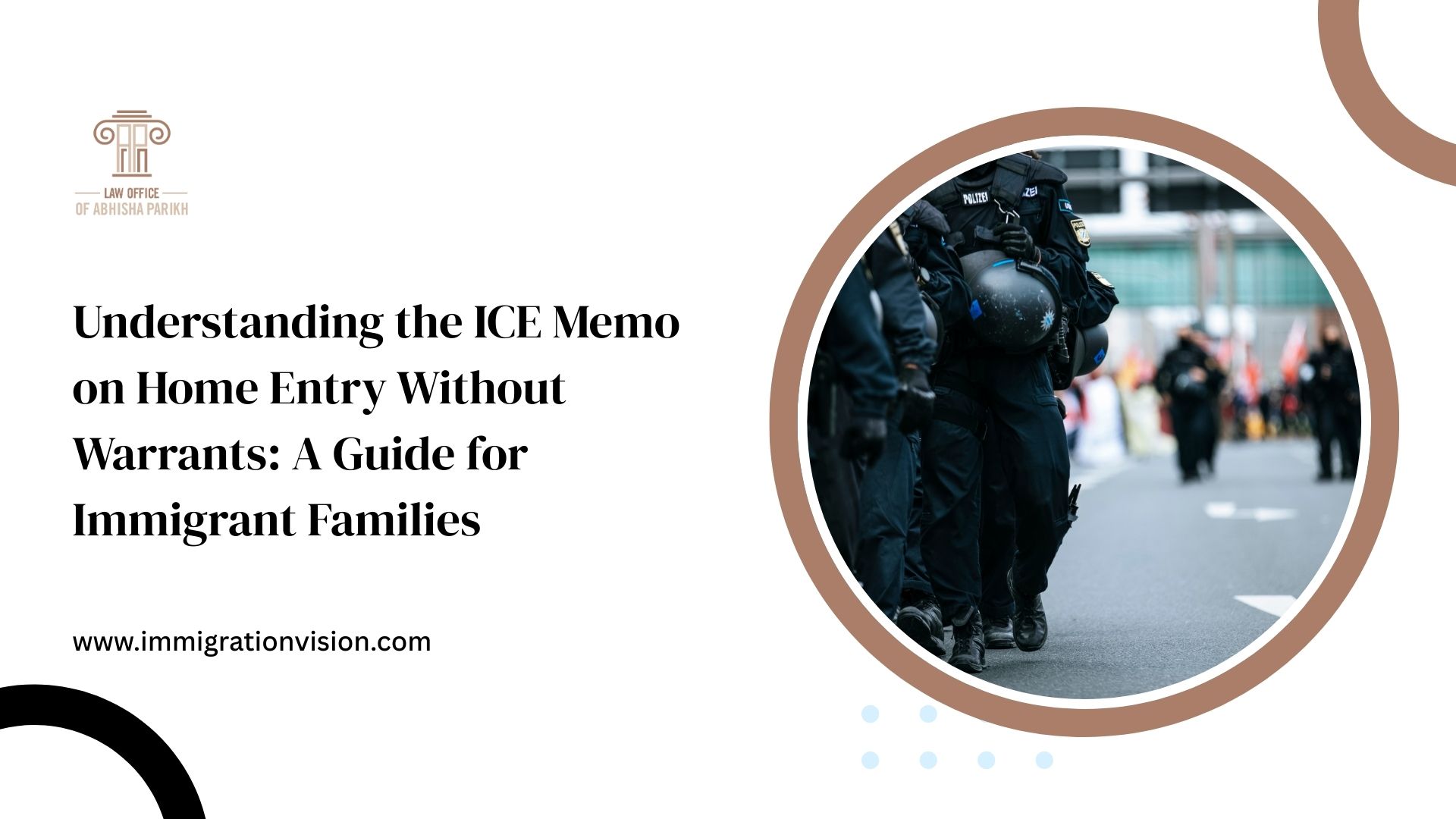
The ICE memo’s impact on immigrant families has been alarming. Reports describe ICE officers wearing heavy tactical gear, sometimes with rifles drawn, entering homes during early-morning raids. In some cases, federal immigration officers allegedly entered the wrong homes, terrifying families with no connection to enforcement actions.
For immigrant communities, especially in immigrant-friendly states, the memo has created fear and confusion. Families worry about how to respond if ICE agents knock on the door, and whether refusing entry could escalate the situation.
Local governments and advocacy organizations report increased calls from families seeking emergency legal guidance after immigration enforcement operations involving home entry.
Know Your Rights if ICE Comes to Your Home
Despite the memo, constitutional protections still apply. Legal experts stress that the Fourth Amendment protects everyone in the United States, regardless of immigration status, and legal help for immigrants and families is also available.
If ICE agents come to your door:
- You generally do not have to open the door unless they present a judicial warrant signed by a judge.
- You may ask officers to show the warrant through a window or slide it under the door.
- An ICE administrative warrant alone does not typically authorize entry into a person’s home.
- You have the right to remain silent and the right to speak with an attorney.
Families should remember that ICE must act lawfully, even when enforcing a final order of removal.
Legal Challenges and What Happens Next
Multiple lawsuits now challenge the memo, arguing that it violates the Constitution’s Fourth Amendment and exceeds law enforcement authority. Some judges have already ruled that warrantless entries into private residences are unlawful.
The issue may ultimately reach higher courts, potentially even the Supreme Court, especially if lower courts issue conflicting rulings. Meanwhile, advocacy groups are pushing for clearer guidance, stronger protections, and limits on mass deportations conducted without court oversight.
The controversy has also revived debate about immigration policy during the Trump administration, when aggressive enforcement tactics expanded under President Donald Trump’s administration—a history that shapes public reaction today.
Staying Informed and Prepared
The ICE memo on entering homes without a judicial warrant represents a significant shift in immigration enforcement, with profound implications for civil liberties. While ICE officials argue the policy targets individuals with removal orders, critics warn it erodes judicial oversight and threatens constitutional safeguards.
If you are facing questions about the ICE warrantless home entry policy, administrative warrants, or potential issues, consulting an experienced immigration attorney is essential. The Law Office of Abhisha Parikh provides knowledgeable, compassionate legal guidance to individuals and families across New Jersey, helping ensure your rights are protected and your options clearly understood during uncertain times.
News Source: https://apnews.com/article/ice-arrests-warrants-minneapolis-trump-00d0ab0338e82341fd91b160758aeb2d